Wolfenstein 3D
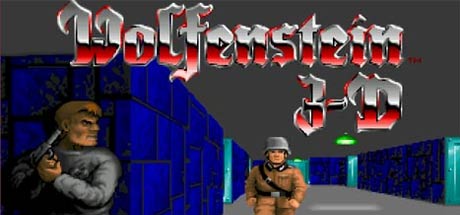
Wolfenstein 3D is a first-person shooter developed by id Software and released in 1992. Often called the grandfather of modern FPS games, it established the core gameplay formula that would later define DOOM and the entire shooter genre.
The game follows B.J. Blazkowicz, an Allied spy escaping from a Nazi stronghold during World War II, fighting his way through guards, mutants, and bosses in a maze-like fortress.
Development
Wolfenstein 3D was developed by a small team at id Software consisting of John Carmack, John Romero, Tom Hall, Adrian Carmack, and Jay Wilbur.
The project was inspired by the 1981 stealth game Castle Wolfenstein by Muse Software. However, the id team reimagined the concept as a fast, violent action shooter instead of a stealth title.
John Carmack created a new raycasting engine that allowed for smooth, real-time 3D environments on limited PC hardware. Tom Hall wrote the game’s design document and structured its story, while John Romero handled much of the gameplay tuning and level flow. Adrian Carmack produced the art and gory sprite animations that gave the game its distinct tone.
Gameplay
Wolfenstein 3D established several mechanics that became genre standards:
Fast, fluid first-person movement
Health, ammo, and weapon pickups scattered throughout levels
Secret rooms and collectible treasure
Keycards and locked doors as progression tools
Boss fights with unique characters and voice lines
The goal in each level is to reach the elevator to the next floor, defeating enemies and uncovering secrets along the way. The game’s brutal efficiency and constant sense of speed were revolutionary for 1992.
Shareware Release and Success
Released under the shareware model, Wolfenstein 3D allowed players to download the first episode for free, with five more available in the full version. This approach, managed by Jay Wilbur, made the game explode in popularity through online bulletin boards and mail-order sales.
It became one of the most successful shareware titles ever distributed and turned id Software into one of the most profitable independent studios of the early 1990s.
Controversy and Impact
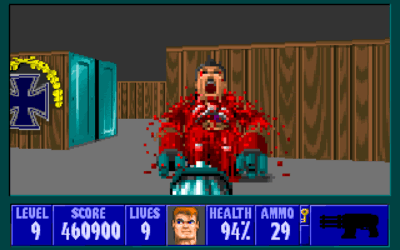
The game’s violent imagery and Nazi iconography led to controversy and censorship in some regions, especially in Germany. Despite this, Wolfenstein 3D became a cultural milestone, proving that PC gaming could deliver the same adrenaline and action as arcade shooters.
It also paved the way for DOOM, which refined and expanded on its ideas just one year later.
Wolfenstein 3D directly influenced countless later titles, from Rise of the Triad and Duke Nukem 3D to Half-Life and beyond.
Legacy
Wolfenstein 3D is widely regarded as the foundation of the first-person shooter genre. Its code and design principles became the blueprint for every major FPS that followed.
The series continued with:
Spear of Destiny (1992)
Return to Castle Wolfenstein (2001)
Wolfenstein: The New Order (2014)
Wolfenstein II: The New Colossus (2017)
Modern reboots kept the spirit of the original alive while exploring deeper narrative and cinematic gameplay. The influence of Wolfenstein 3D remains visible in nearly every shooter made since its release.