Doom
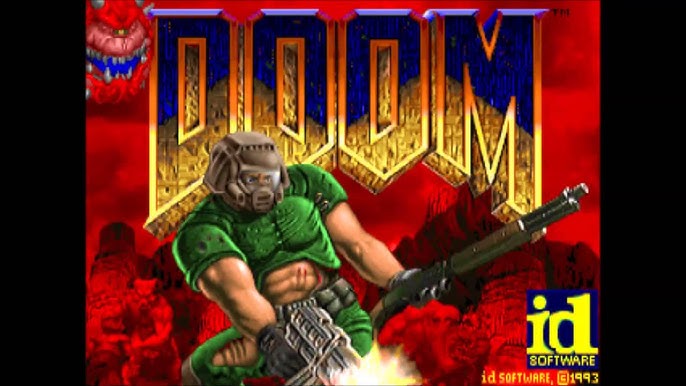
DOOM is a first-person shooter franchise created by id Software. The original game, released in 1993, revolutionized PC gaming and defined the modern shooter genre. Known for its fast gameplay, demonic imagery, and heavy-metal atmosphere, DOOM became a cultural icon and one of the most influential video games ever made.
Over the years, the series has evolved through numerous sequels, reboots, and expansions, maintaining its reputation for speed, violence, and technical innovation.
The Original DOOM (1993)
The first DOOM was developed by John Carmack, John Romero, Tom Hall, and Adrian Carmack at id Software and released on December 10, 1993. It introduced 3D-style environments, networked multiplayer, and moddable level design through the WAD file format.
Players assumed the role of a space marine fighting hordes of demons unleashed from Hell on Mars’ moons. The game’s combination of smooth movement, brutal combat, and horror-inspired art made it an instant success.
DOOM also popularized online multiplayer through “deathmatch” mode, one of the first examples of competitive FPS gaming.
DOOM II: Hell on Earth (1994)
A year later, id Software released DOOM II: Hell on Earth. The sequel expanded on the original with larger maps, new monsters, and the iconic Super Shotgun. It continued the story as demons invaded Earth and players fought to save humanity.
Although technically similar to the first game, DOOM II refined the formula and became one of the best-selling PC games of its time.
Modding and Community Legacy
DOOM’s WAD file system allowed players to create custom maps, textures, and even full campaigns. This feature gave rise to one of the strongest and longest-lasting modding communities in gaming history.
Fan-made projects like Final DOOM, Brutal DOOM, and MyHouse.wad continue to expand the universe and push creative boundaries decades after the original release.
The open-source release of the DOOM engine in 1997 ensured that the game remained alive on every imaginable platform, from calculators to smartwatches.
DOOM 3 (2004)
In 2004, id Software rebooted the series with DOOM 3. Directed by Tim Willits and built on the id Tech 4 engine, the game emphasized atmosphere, lighting, and survival horror.
It reimagined the story as a more cinematic experience, focusing on tension and storytelling rather than pure speed. The slower pacing divided fans but showcased a new era of technology for id Software.
Despite the tonal shift, DOOM 3 was a major technical milestone for PC graphics.
DOOM (2016)
After years of uncertainty, the franchise was revived with DOOM (2016), developed by id Software under Bethesda Softworks. The reboot returned to the series’ roots with fast movement, fluid combat, and aggressive gameplay.
Players took control of the DOOM Slayer, a nearly mythic warrior who wages war against Hell’s forces across Mars and beyond. The game received critical acclaim for combining classic speed with modern design and sound.
Its id Tech 6 engine delivered stunning visuals while maintaining a smooth 60 FPS on most systems.
DOOM Eternal (2020)
DOOM Eternal expanded on the 2016 reboot with larger levels, more vertical mobility, and complex combat mechanics. The game emphasized resource management, requiring players to balance ammunition, armor, and health pickups in the middle of battle.
Released in March 2020, DOOM Eternal was praised for its intense action, soundtrack, and level design. It became one of the highest-rated shooters of the decade and solidified the reboot’s success.
DOOM: The Dark Ages (Upcoming)
In 2025, id Software announced DOOM: The Dark Ages, a prequel set in a medieval-inspired world. Players once again control the DOOM Slayer, this time battling demons with ancient weaponry, shields, and siege engines.
The game aims to explore the Slayer’s origins and introduce new combat systems while maintaining the franchise’s hallmark intensity and speed.
Spin-offs and Adaptations
The DOOM universe has inspired novels, comics, movies, and board games. Film adaptations include DOOM (2005) starring Dwayne Johnson and DOOM: Annihilation (2019).
While neither film captured the success of the games, they reflect the enduring cultural presence of the franchise.
DOOM has also influenced countless other shooters and pop culture references, appearing in everything from memes to programming experiments like “Can it run DOOM?”
Legacy
DOOM’s influence on gaming is unmatched. It popularized the first-person shooter genre, defined multiplayer combat, and inspired entire generations of developers.
The franchise remains a living part of gaming history, evolving with each generation while never losing its chaotic energy and identity.
Whether played through the pixelated corridors of 1993 or the cinematic arenas of DOOM Eternal, the series continues to represent the heart of fast-paced, adrenaline-fueled action.
See Also